Lead nurturing: what it is, how it works and how to build an email flow
Learn what lead nurturing is, how it works across your sales funnel, and how to build an email flow that turns captured contacts into paying customers.

What will we see in this post

You’ve managed to attract people interested in your business, captured their contact details, and now you have a list of potential customers. But what happens next?
Not every lead is ready to buy at first contact. Some still need to better understand the problem they want to solve, learn about the available solutions, or simply build trust before making a decision.
Leaving these contacts without follow-up can mean missing out on opportunities. A widely shared statistic attributed to MarketingSherpa states that 79% of marketing leads never convert into sales, linking this to a lack of nurturing. Although it’s an old figure whose original research couldn’t be found, it highlights an important point: capturing contacts isn’t enough.
That’s where lead nurturing comes in: a strategy that helps turn initial interest into a relationship and brings your audience closer to a buying decision.
In this article, you’ll learn how it works, what its benefits are, and how to build an email flow to nurture your leads in practice.
What is lead nurturing?
Lead nurturing is the process of building a relationship with potential customers through relevant content, helping them move through the buying journey until they’re ready to make a decision.
Instead of presenting an offer right after the first contact, this strategy focuses on understanding the lead’s needs and providing information that makes sense for where they are right now.
For example, someone who downloaded a free ebook about personal finance could receive content about expense planning, budgeting, and investing for beginners. Over time, the goal is for this person to understand the topic better and recognize the need for a more complete course.
That’s the purpose of nurturing leads: keeping communication useful and consistent, building trust before trying to sell.
How does lead nurturing work?
Lead nurturing works mainly through automated emails, planned to deliver content according to each contact’s interests and buying stage.
Imagine someone signs up for a free class about digital marketing. After signing up, they might receive a welcome email, followed by a few more emails with educational content, practical tips, and real-world examples. Only later, once they understand the topic, do they receive an offer.
This sequence is called a lead nurturing flow. With automation tools, you can schedule sends and adapt messages based on how your audience interacts. That way, your communication stops being a series of offers and starts following each lead’s interest.
How does lead nurturing fit into the sales funnel?
The relationship between lead nurturing and the sales funnel lies in preparing contacts to move from one stage of the buying journey to the next.
At the top of the funnel, consumers are discovering a topic or identifying a need. This is usually when leads are captured, through free materials, content, and forms on a landing page.
In the middle of the funnel, people understand their problem better and start researching solutions. This is where nurturing takes center stage, offering information to answer questions, deepen knowledge, and build trust.
At the bottom of the funnel, when the lead is closer to buying, your communication can include demos, testimonials, and offers. This way, nurturing connects first interest to the final decision without skipping steps.
What is the difference between lead generation and lead nurturing?
The main difference between lead generation and lead nurturing is the goal of each strategy. Lead generation aims to attract interested people and capture their contact details. Lead nurturing develops the relationship after that, preparing the lead for a potential purchase.
Think of someone who signs up to download a free photography guide. The sign-up is lead generation. The emails sent afterward, with tips on lighting, composition, and photography techniques, are part of nurturing.
The two strategies work together: while generation grows your contact base, nurturing helps you make the most of the opportunities you’ve gained. To better understand the first stage, check out our content on how to attract customers.
How to create a lead nurturing flow
To create a lead nurturing flow, you need to organize a sequence of content that considers who your audience is, what questions they have, and what they need to know before making a buying decision.
A good lead nurturing strategy isn’t just about sending messages regularly, but about maintaining a relationship in which relevant information is shared with your audience. Messages should follow a plan, with a logical order of topics and clearly defined goals.
1. Define your persona
The first step is identifying who you want to reach. To do this, consider the interests, goals, challenges, and behaviors of the people who showed interest in your business or product.
If you sell cooking courses, for example, you may have leads who want to learn family recipes and others who want to start a food business. Although both are interested in the same topic, their needs are different.
Knowing these characteristics helps you choose topics, adapt your language, and create more relevant content for each profile.
2. Map which funnel stage the lead is in
After defining your persona, try to understand which stage of the buying journey each contact is in. Someone who just discovered a problem usually needs introductory explanations. Someone evaluating solutions, on the other hand, may be interested in examples of results and more specific information.
Lead interactions also offer important clues. Downloading a beginner’s guide, watching a class, and clicking on a sales page are actions that can signal different levels of interest.
With this information, it’s easier to plan communication that follows your audience’s timing, without presenting an offer too early.
3. Create your email schedule
Now it’s time to decide how many messages you’ll send, in what order, and how often.
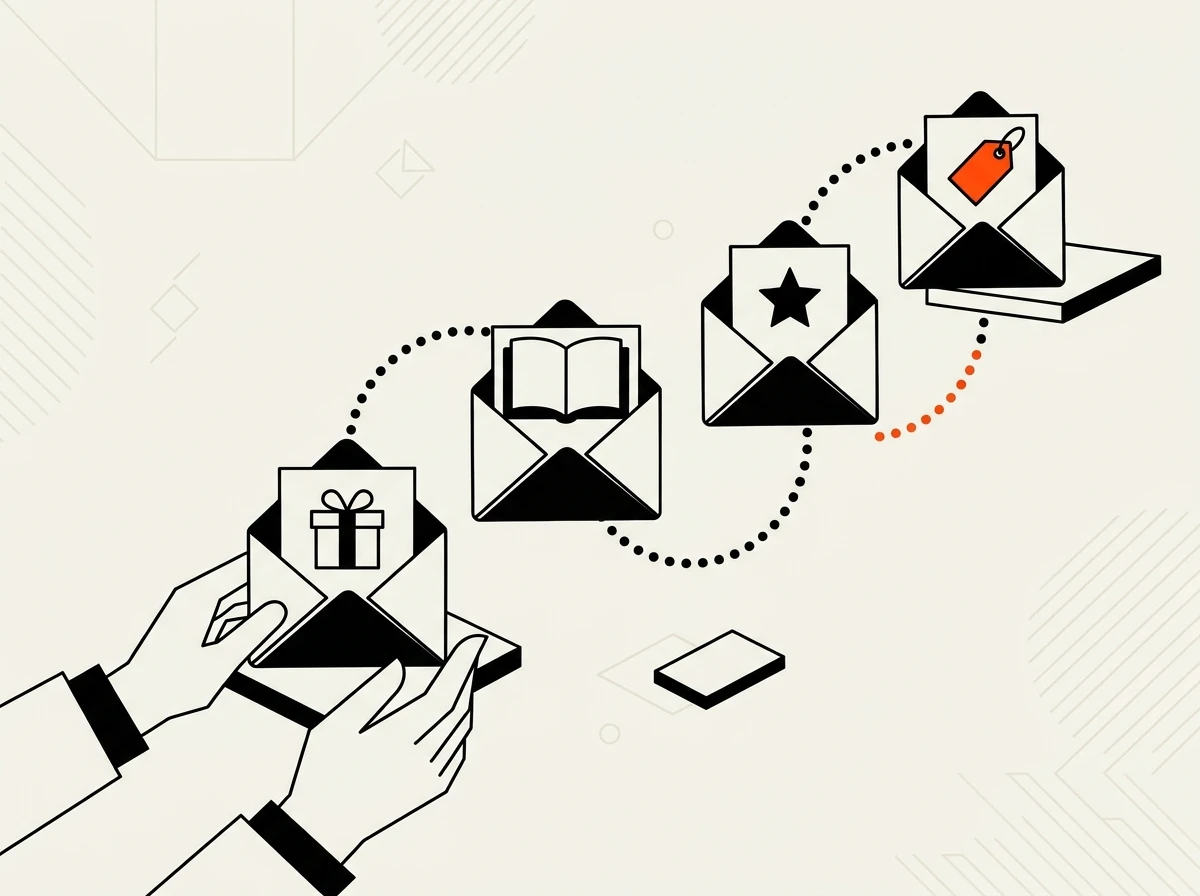
A lead nurturing email schedule can start with a simple sequence of four messages: welcome, educational content, practical example, and offer. Emails can be sent over a few days, with intervals that make sense for your audience’s behavior.
There’s no ideal frequency for every business. More complex products may require a longer relationship, while simpler decisions can happen faster.
What matters is staying consistent without overwhelming your contacts. Every email should add something to the conversation.
4. Create the content for each email
With your schedule set, write messages with specific goals. One email might teach something new; another, answer a common question; and a third, show how a solution works.
Imagine a flow for people who want to learn graphic design. The first message delivers a free resource. The second covers common beginner mistakes. The third shows a hands-on project or a student’s experience. Finally, the person receives an invitation to explore a full course.
This progression helps build interest naturally. Content relevance also affects engagement. A historical study presented in a HubSpot resource found an average click-through rate of 8% for nurturing emails, compared to 3% for regular campaigns. The comparison also appears in materials associated with marketing expert Dan Zarrella.
Although these percentages shouldn’t be treated as a current benchmark for every market, they illustrate the potential of communication tailored to the lead’s interests.
5. Monitor and adjust
Once your flow is running, track the results to see what’s working and what needs improvement.
Key metrics include open rate, click-through rate, and conversion rate. Opens can help you gauge initial interest, although this metric can be imprecise. Clicks show engagement with your content, while conversions show how many people took the desired action.
If an email gets few clicks, for example, it’s worth reviewing the subject line, the approach, or the call to action. It’s also important to monitor unsubscribes and respect your audience’s communication preferences.
With these adjustments, your flow stops being a static sequence and evolves with your leads’ behavior.
What is the lead awareness cycle?
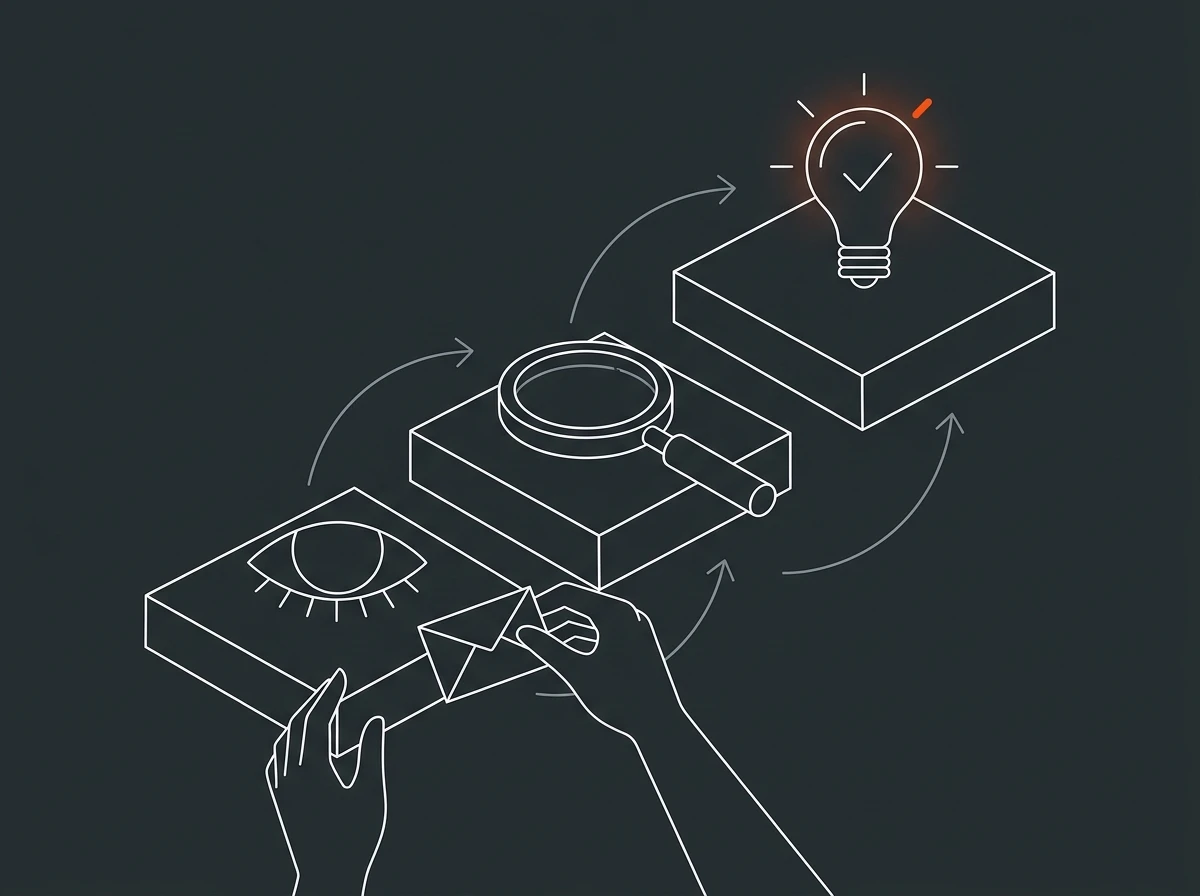
The lead awareness cycle represents the different levels of understanding a person has about their problem and the possible solutions.
Knowing these stages helps you plan more relevant content and avoid sending an offer before the lead even understands their need.
In simple terms, there are three stages:
- Unaware: the person doesn’t yet realize they have a problem or an opportunity. Educational content can help them recognize it.
- Problem-aware: the lead has identified a challenge but doesn’t know how to solve it yet. Guides, tutorials, and explanations can show possible paths.
- Solution-aware: the person already knows the alternatives and starts evaluating which one best meets their needs. Comparisons, demos, and practical examples become more relevant.
Imagine someone who wants to earn extra income. At first, they may not know they could sell digital products. Later, they discover they can turn their knowledge into a course and start researching how to do it.
Each stage requires different information. That’s why the content you send during nurturing should follow how the lead’s understanding and interest evolve.
Benefits of lead nurturing
Lead nurturing helps you make better use of the contacts you capture, strengthen your relationship with your audience, and prepare potential customers for a buying decision.
The main benefits include:
- Shorter sales cycle: leads who reach the sales stage with more information may need less time to decide.
- More qualified leads: the relationship helps identify contacts who show more interest and are more ready for an offer, which also supports lead scoring.
- Better use of your contact base: you develop existing opportunities instead of relying only on new leads.
- Stronger relationship with your audience: consistently delivering relevant content builds trust and keeps your brand top of mind.
These potential gains also show up in industry research.
According to historical data compiled by the consultancy Invesp, companies that excel at lead nurturing generate 50% more sales-ready leads at a 33% lower cost. These results suggest the potential for more efficient qualification, which can also help reduce your Customer Acquisition Cost (CAC), depending on your business’s other costs and conversion rates.
The importance of an ongoing relationship also appears in Zendesk’s 2022 Customer Experience Trends Report. The study found a 14% increase in customer engagement compared to the previous year, pointing to more interactions and opportunities for upselling and cross-selling. Although the report focuses on customer experience rather than lead nurturing specifically, it reinforces the value of relevant communication throughout the customer relationship.
Tools that help with lead nurturing
Marketing automation tools let you schedule and send messages based on your contacts’ characteristics and behavior. This way, you can run different flows without sending every email manually.
Well-known platforms include ActiveCampaign, Mailchimp, and HubSpot, which offer features for audience segmentation, email automation, and campaign tracking.
With these tools, you can set up, for example, an automatic message after someone downloads a resource, or create specific sequences for people interested in particular topics.
But remember: the tool only runs the flow. The quality of your strategy depends on knowing your audience, planning your content, and tracking results.
How to use lead nurturing to sell courses and digital products
If you sell online courses, ebooks, or other digital products, lead nurturing can help you turn interest in free content into a sales opportunity. To go deeper, see also how to sell online courses.
Imagine you have a beginner photography course and offer a free guide with tips for taking better photos with your phone. When someone downloads it and agrees to receive emails, you can start a flow related to the topic.
A simple sequence could look like this:
- Email 1 – Resource delivery: the lead receives the free guide and a welcome message.
- Email 2 – Educational content: you share lighting and framing tips to help them improve their photos.
- Email 3 – Social proof: you share a student’s project or testimonial, showing a real learning experience.
- Email 4 – Offer: you invite the lead to explore the full course, explaining the content, the benefits and, if available, a limited-time promotion.
Notice that there’s a clear connection between the initial interest, the content sent, and the product offered. The course appears as a way to deepen knowledge the person has already started building.
The same logic works in other niches, such as languages, crafts, music, professional development, and digital marketing.
The key is to avoid treating every contact the same way. The more your communication matches your audience’s needs, the better your chances of building a meaningful relationship that creates conversion opportunities.
Ready to nurture your leads?
Generating leads matters, but the work doesn’t end when someone fills out a form or downloads a free resource. It’s the relationship you build after that first contact that can help turn interest into sales.
As we’ve seen, good lead nurturing starts with knowing your audience, considers their awareness level, and uses relevant content to support each stage of the buying journey.
With a well-planned email flow, you can keep communication active, qualify contacts, and create sales opportunities without pitching all the time.
And if you sell courses, ebooks, or other digital products, you can count on the email and automation solutions available in the Hotmart ecosystem to structure your communication and strengthen your relationship with potential buyers.
After all, before winning a sale, you need to win the attention and trust of the person on the other side.
Frequently asked questions about lead nurturing
How many emails should a lead nurturing flow have?
There's no fixed number. It depends on the product, how complex the buying decision is, and how your audience behaves.
A first flow can have three, four, or five messages, for example. What matters is that each one has a clear goal and helps the lead move forward in the buying journey.
Does lead nurturing only work through email?
No. Although email is one of the most used channels, lead nurturing can also happen through WhatsApp, social media, and remarketing campaigns.
The choice depends on your audience's habits and the permissions they've given you to contact them. The goal is to keep a relevant relationship, whatever the channel.
What are the steps of a lead nurturing flow?
The main steps are defining your persona, identifying the funnel stage, planning your message schedule, creating the content, and tracking results.
In practice, the flow can start with a welcome message, continue with educational content and practical examples, and end with an offer once the lead is ready for it.
Is lead nurturing still worth it?
Yes. Lead nurturing remains a relevant strategy for businesses that want to strengthen relationships with potential customers and make better use of the contacts they've already captured.
By delivering useful content and following your audience's interest, you can qualify opportunities, answer questions, and help leads move forward in the buying journey.